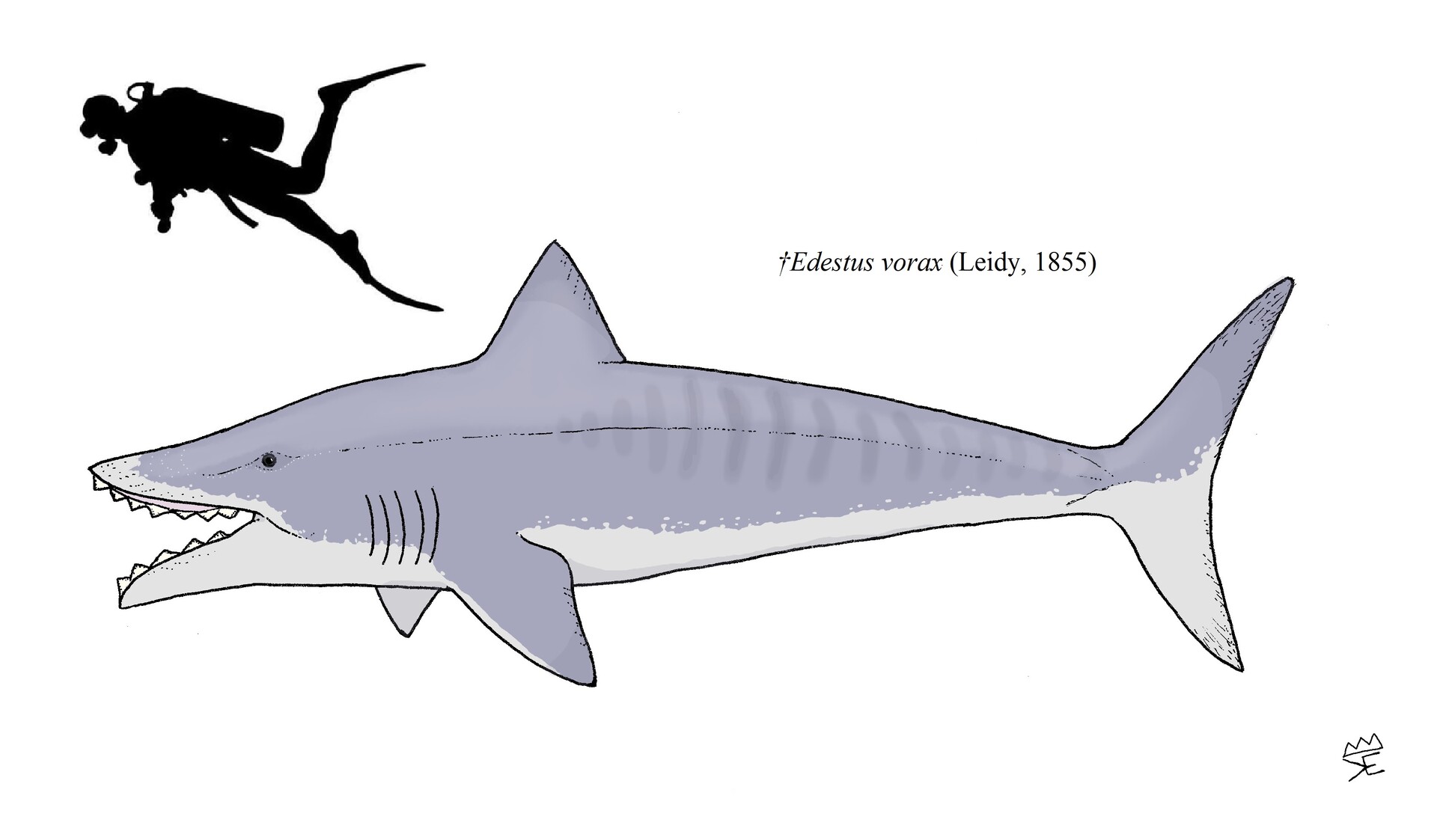
Edestus vorax
Known to some as the "scissor-tooth shark", Edestus was actually a superficially shark-like fish called a Eugeneodont. Eugeneodonts also include the large, whorl-toothed Helicoprion and smaller forms like Caseodus (which unlike other Eugeneodonts, survived into the Triassic), and were members of the Holocephali; more closely related to modern Ratfish and Chimeras than to sharks. Edestus is known from several species; all from the Late Carboniferous, and with some growing to the size of a modern Great White Shark. The strange orientation of the jaws and teeth of Edestus suggest that the animal attacked prey with a unique vertical slashing motion to wound and kill prey. Their streamlined bodies also suggest a pursuit predator not unlike a mackeral shark in form.